
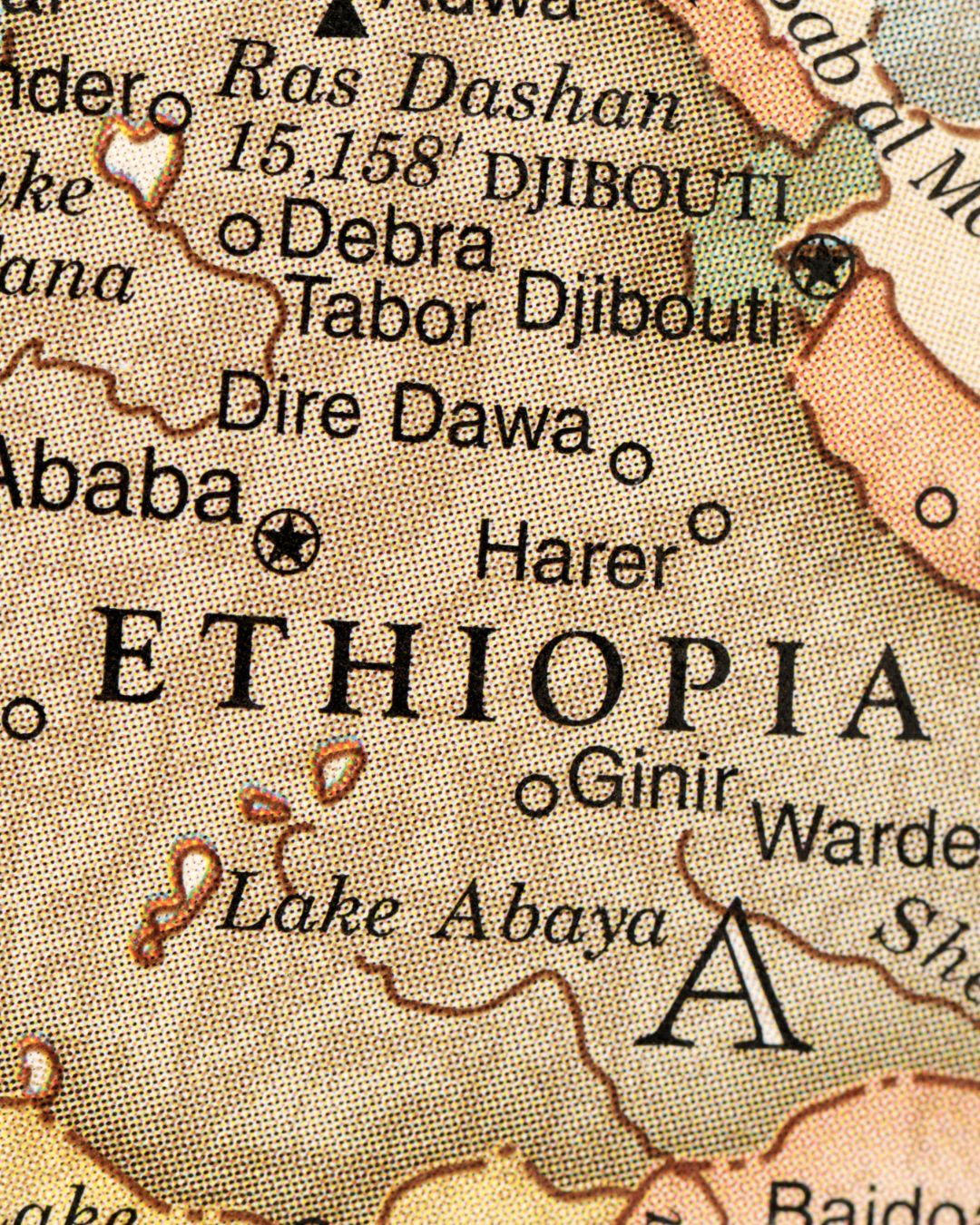
AROUND THE WORLD IN COFFEE: ETHIOPIA
Every cup of coffee has a story, but some stories run deeper than others. Ethiopia holds a unique place in the world of coffee. It is widely recognized as the country where coffee arabica originated, and today it remains one of the most important producers of high quality Arabica coffee globally. For our Around the World in Coffee series, we’re starting where coffee itself began.
Widely recognized as the birthplace of coffee, Ethiopia is where coffee is more than a beverage, it’s a part of daily life, culture, and tradition. Legend traces coffee’s discovery to a goat herder named Kaldi, who noticed his goats were unusually energetic after eating cherries from a particular tree. While the story is debated to be folklore, the impact of Ethiopian coffee is objectively real.

Coffee grows wild in parts of southwestern Ethiopia, particularly in forested regions where Arabica plants have existed for centuries. Unlike many coffee-producing countries that rely on a limited number of cultivated varieties, Ethiopia is home to thousands of genetically distinct coffee types. This diversity is one reason Ethiopian coffees are known for their wide range of flavor profiles.
Coffee production in Ethiopia is also deeply tied to daily life and the economy. A significant portion of the population depends on coffee for their livelihood, and the country is one of Africa’s largest coffee exporters. Most Ethiopian coffee is grown by small holder farmers, often on plots of land measuring just a few acres.
Ethiopia’s coffee is typically categorized by growing region rather than farm or estate. Well known regions include Yiracheffe, Sidamo, and Harrar, each with distinct climate conditions and processing traditions.
Many Ethiopian coffees are washed (wet processed), which tends to produce clean, bright cups with pronounced acidity. Natural (dry processed) Ethiopian coffees are also common and are known for fuller body and fruit forward characteristics. Across these styles, Ethiopian coffees are often associated with floral aromatics, citrus notes, and complex fruit flavors, traits that come directly from the country’s native Arabica varieties and growing conditions.

Coffee in Ethiopia is closely tied to social and cultural life, most notably through the traditional coffee ceremony. The ceremony involves roasting green coffee beans over an open flame, grinding them by hand, and brewing the coffee in a clay pot known as a jebena. It is typically performed in the presence of guests and can take place daily in homes and communities. The ceremony emphasizes hospitality, shared time, and the importance of coffee as more than a beverage, reflecting its long standing role in Ethiopian society.
Our Organic Ethiopian Single Origin Coffee at Camano Island Coffee Roasters is dry processed, a method commonly used in Ethiopia that allows the coffee cherry to dry around the bean before removal. This process contributes to the fruit forward characteristics often associated with Ethiopian coffees.
This coffee features a strong blueberry aroma and flavor notes of blueberry, maple syrup, and brown sugar, with a medium roast and medium body. Dry processing emphasizes sweetness and depth, while the medium roast allows these flavors to remain clear and balanced rather than overshadowed by roast intensity.
As part of our Around the World in Coffee series, our Ethiopian Reserve represents both the historical and ongoing importance of Ethiopia in the coffee world. It offers a direct connection to the place where Arabica coffee originated and continues to influence how coffee is grown and enjoyed today.
You can explore our Ethiopian Reserve coffee here.